
I’ve watched CMS tighten RPM rules three times since the codes launched, and this is the first one that isn’t about the device or the data. It’s about who’s allowed to be on the other end of it.
If a large share of your RPM panel is run through a contracted monitoring vendor today, this is worth fifteen minutes of your attention before November.
What CMS Is Actually Proposing
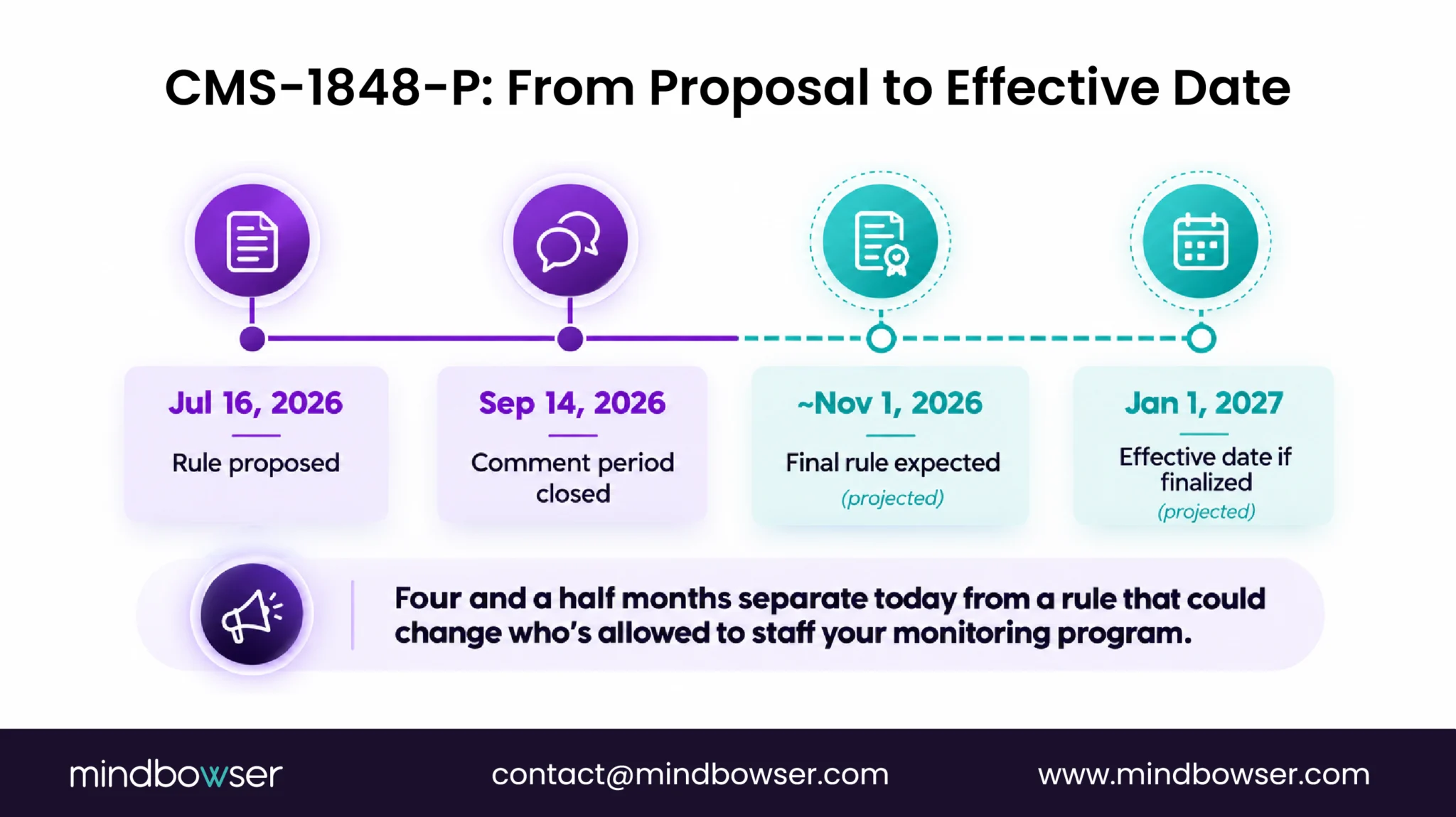
CMS filed this as part of the CY2027 Medicare Physician Fee Schedule proposed rule, published in the Federal Register on July 16, 2026, as CMS-1848-P (document 2026-14327). The core change: the clinical staff who furnish RPM and RTM treatment management services would need to be employees of the billing practice. A contracted third-party monitoring company, the kind a lot of multi-site programs lease staff from today, would no longer qualify for that piece of the service.
The comment period closed September 14, 2026. CMS typically finalizes the Physician Fee Schedule rule around November 1 each year, with changes taking effect January 1 of the following year, so the realistic timeline here is a final rule around November 1, 2026, effective January 1, 2027, assuming CMS finalizes this provision as proposed, which isn’t guaranteed yet.
If you’re already running RPM through our billing breakdown’s code set (99453, 99454, 99457, 99458), this is the provision to track, because it changes who can furnish the service underneath those codes, not the codes themselves.
Why CMS Says It’s Doing This
CMS didn’t pull this out of nowhere. It’s leaning on its own Office of Inspector General’s findings about how RPM has actually been delivered.
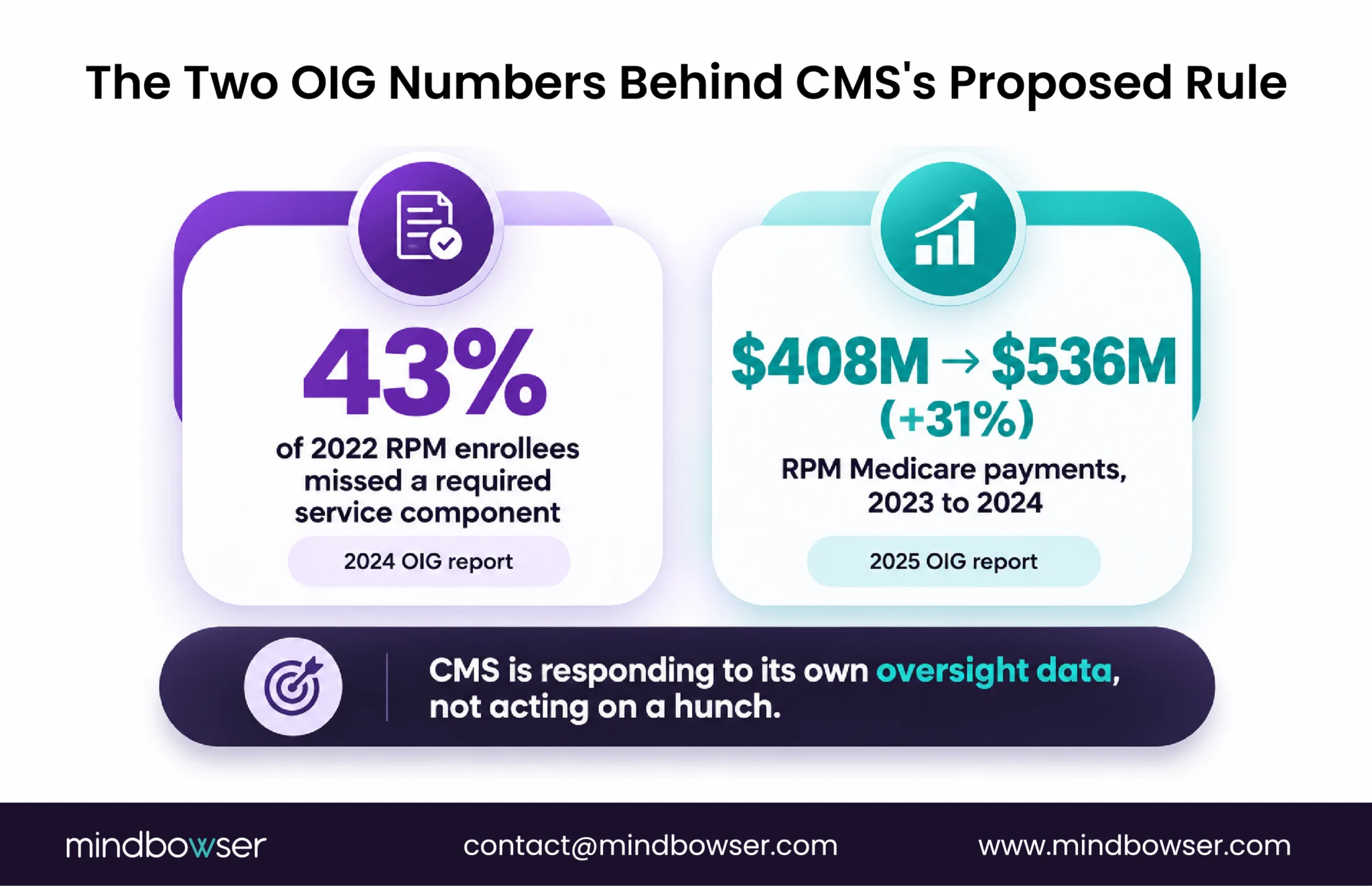
A 2024 OIG report examined 2022 RPM claims and found that 43% of enrollees missed at least one required service component, most commonly the 16-day transmission threshold or the monthly interactive communication requirement. A 2025 OIG follow-up tracked the spending side: RPM payments rose 31% in a single year, from $408 million in 2023 to $536 million in 2024.
Taken together, CMS’s framing is that the program grew fast while a meaningful share of billed services didn’t fully meet the requirements behind them, and third-party staffing arrangements are harder for the billing practice to directly supervise than an employee sitting down the hall.
That’s CMS’s rationale, not a verdict on any specific vendor’s work. But it’s worth taking seriously, because it explains why the fix CMS reached for is an employment test rather than a documentation test. Documentation rules are easy to write around. An employment relationship is harder to fake on an audit. Becker’s Hospital Review covered this same rationale in detail shortly after the rule was filed, pulling CMS’s fragmentation concern and both OIG reports into one summary.
What This Doesn’t Touch
No. The rule doesn’t ban RPM or RTM software, devices, or vendors generally. It restricts who can be paid for furnishing the clinical monitoring service itself. Your device vendor, your software platform, your data connectivity: none of that is affected. What changes is whether the person reviewing transmissions and making the required monthly contact can be a contractor, or has to be your employee.
That distinction matters because a few headlines covering this have shortened it to “CMS bans third-party RPM,” which overstates it. If you’re deciding whether to build or keep buying the underlying remote monitoring platform itself, that’s a separate decision from this one, and this rule doesn’t force your hand on it either way.
Who Actually Carries This
The programs most exposed are the ones leaning on contracted monitoring staff to cover a panel their own team doesn’t have headcount for, and that’s disproportionately rural and multi-site primary care and specialty groups, where hiring a dedicated RPM nurse for every location isn’t realistic today.
ccnhealth’s transition playbook for this exact rule cites a staffing-ratio planning benchmark of roughly one monitor per 200 patients as the number programs should plan around when bringing monitoring in-house. That’s a useful anchor regardless of where you land on timeline, because it’s the number that determines whether “just hire employed staff” is a one-person job or a five-person job.
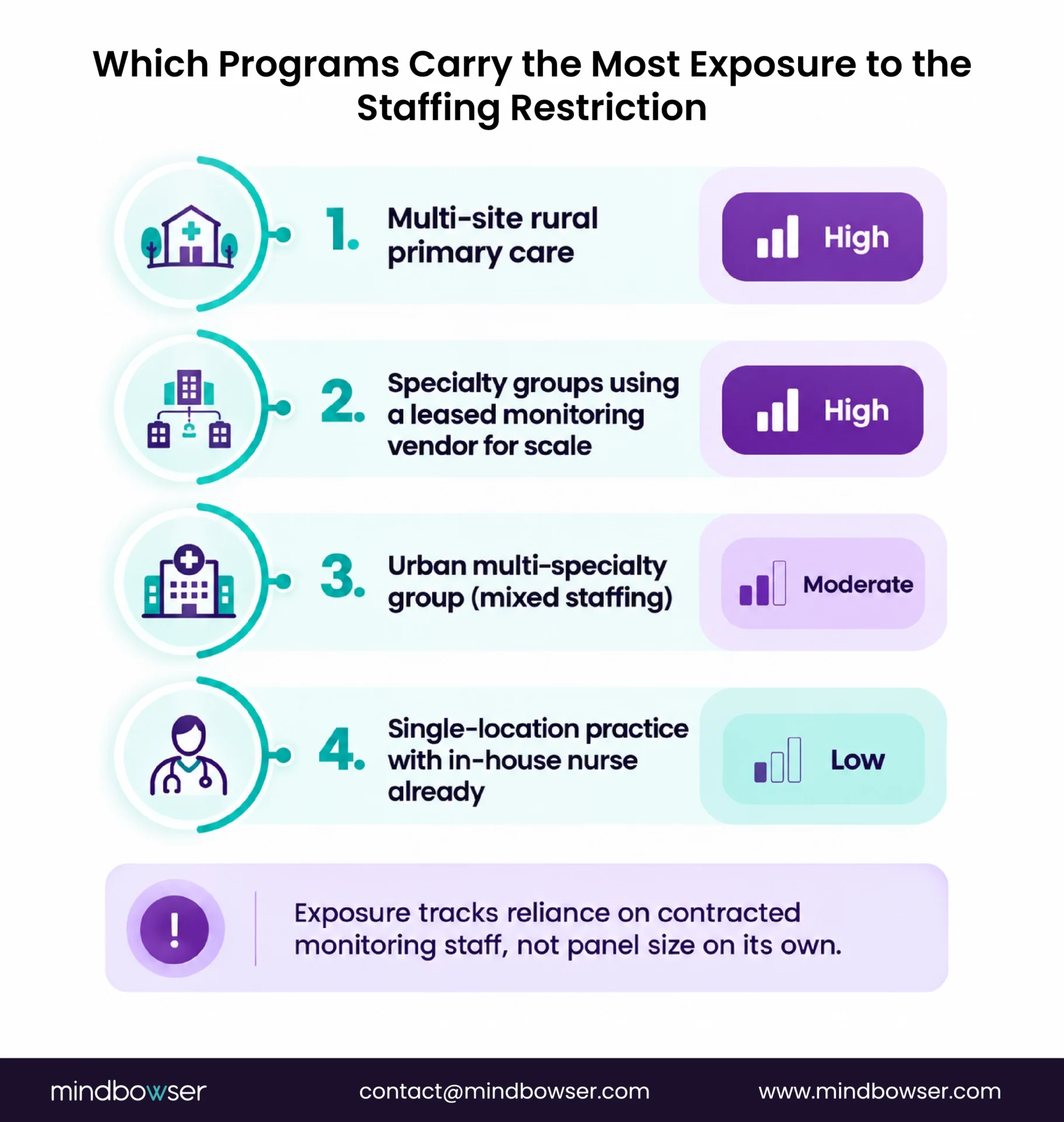
Fig 3: RPM Staffing Risk Across Practice TypesThe ccnhealth staffing-ratio figure above is independently confirmed and carries the weight this section needs without that gap.
